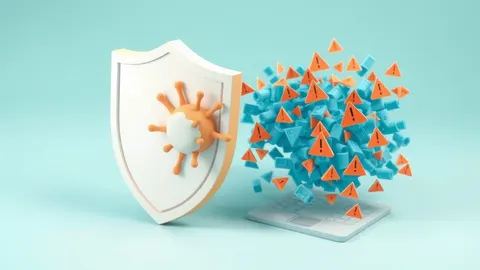
Grouping malware by behavior reveals hidden connections that generic antivirus misses, allowing smaller teams to block entire threat clusters with single configuration changes.
Single sign-on shifts identity risk from individual accounts to the identity provider, creating a single point of failure that requires stricter access controls than distributed systems.
Red teaming reveals hidden gaps by simulating full adversary campaigns, exposing how small weaknesses chain together to bypass layered security controls.
Misconfigured DMARC policies often fail to stop sophisticated brand impersonation attacks because administrators ignore DNS spoofing risks in monitoring data.
Validating cryptographic signatures for every DNS response stops attackers from redirecting traffic to malicious servers, even if they control local network infrastructure.
Brute force attacks do not rely on clever hacking tricks but on systematic trial-and-error volume that overwhelms default security controls and account policies.
Attackers exploit idle resources to drain accounts before alerts trigger, making budget caps and resource tagging the primary defense against financial loss.
Sigma rules abstract detection logic from specific log formats, allowing security teams to share threat hunting strategies across any security information and event management platform.
Most organizations confuse penetration testing with vulnerability scanning, missing the strategic value of simulating attacker logic and chaining low-severity flaws into critical breaches.
Most plugin breaches occur because organizations neglect the code execution context and privilege boundaries rather than ignoring known CVE identifiers.
Digital dumpster diving leaves distinct artifacts in identity logs and file access records that standard monitoring often ignores because it focuses on network traffic rather than local data extraction.
Scareware relies on psychological pressure rather than deep system access, meaning immediate isolation stops the damage before technical removal begins.